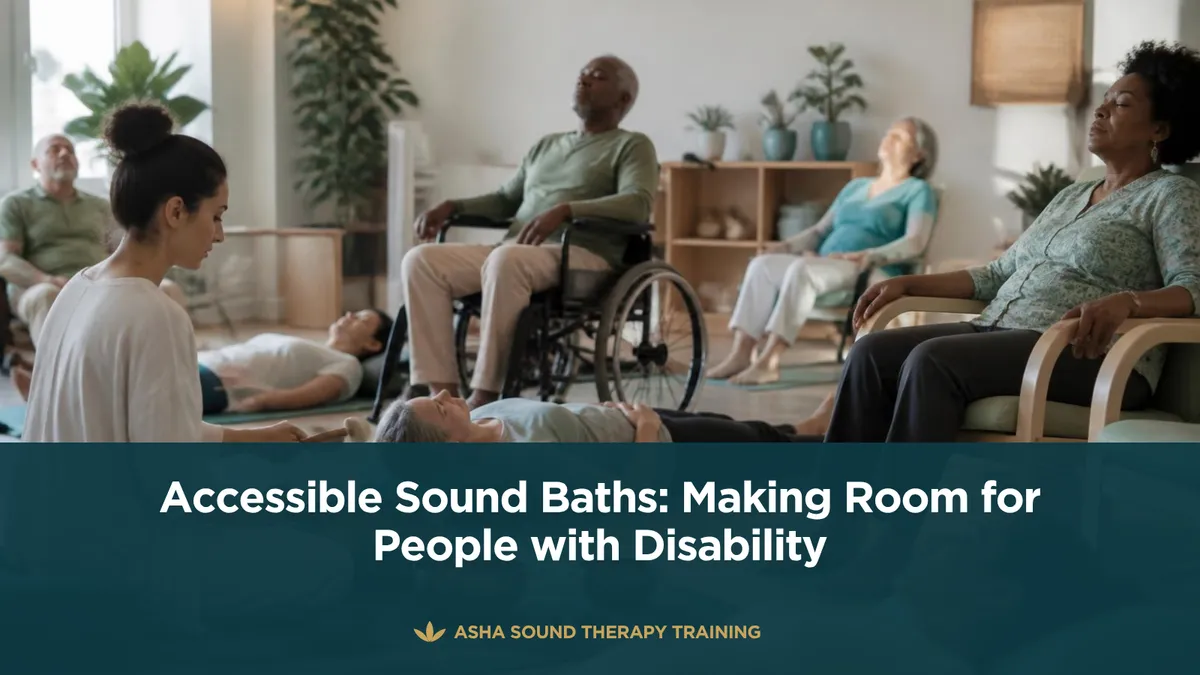
Accessible Sound Baths: Making Room for People with Disability
An accessible sound bath is one where people with disability can take part fully, comfortably and with dignity. In practice, that means offering chairs as well as mats, choosing step-free venues, keeping sound levels manageable, describing the session clearly beforehand and asking each person what they need rather than assuming. Small changes make a big difference.
International Day of People with Disability falls on Thursday 3 December. It is a good moment for all of us who hold sound sessions to look honestly at who can get into our rooms, and who cannot.
Here is a practical place to start.
Why does accessibility matter in sound healing?
Sound sessions are often built around one assumption: that everyone can get down onto a floor mat, lie flat for an hour and get back up again.
Many people cannot. Others can, but not comfortably. Some find loud or sudden sound overwhelming. Some need information in a different format to feel safe walking in.
When a session only works for one kind of body, we quietly tell everyone else it is not for them. Accessibility is simply good practice.
What can you change about the physical space?
Start with the basics:
- Step-free access. Check entrances, toilets and the path between them.
- Chairs as well as mats. Supportive chairs with arms help many people. Make them a normal option, not an afterthought.
- Space around each position. Room for a wheelchair, a walking frame or a support person.
- Bolsters and cushions. For knees, backs and sides.
- Accessible parking or drop-off close to the entrance.
Tell people about these options in your event listing. Many will not ask.
How can you adapt the sound itself?
Sound sensitivity is common, including for some autistic people and people with some neurological conditions or hearing differences.
- Keep volume moderate and avoid sudden loud strikes.
- Describe the instruments you will use and how loud they may get.
- Offer quieter positions further from the gong or drums.
- Welcome earplugs and have some available.
- Tell people they can leave or step out at any time without explanation.
For people who are Deaf or hard of hearing, vibration can still be part of the experience. Ask what they would like, including whether they would like to be closer to or further from the instruments.
How should you communicate before the session?
Clear information reduces anxiety for everyone.
- Describe the session plainly. How long it runs, what happens, whether there is touch, where the toilets are.
- Offer information in more than one format. Written, spoken and, where possible, with photos of the venue.
- Invite access needs in advance. A simple line such as "Let us know if there is anything that would make this session work better for you" is enough.
- Welcome support people and assistance animals. Say so in your listing.
What does respectful practice look like in the room?
- Ask, do not assume. People are the experts on their own needs.
- Speak to the person, not their support worker.
- Never touch without clear consent, and never touch mobility aids without asking.
- Keep your language respectful. Many Australians use "people with disability". Some prefer identity-first language. Follow the person's lead.
Your intake questions matter here too. Our guide to sound therapy contraindications covers health questions to ask before any session.
What about scope of practice?
Accessible practice does not mean offering therapy for a disability. Sound sessions support rest and relaxation. They are not a replacement for medical, allied health or disability support services.
Be clear about that in how you describe your work.
Where do you start if this feels like a lot?
You do not need to change everything at once. Pick three things for your next session:
- Add two supportive chairs to your setup
- Add one line to your listing inviting access needs
- Describe the loudest part of your session in advance
Then ask for feedback afterwards. People with lived experience will tell you what worked and what did not. Listen, adjust and keep going.
Frequently asked questions
Can people in wheelchairs attend a sound bath?
Yes, if the venue is step-free and the facilitator makes space. Many people take part fully from their chair.
Are sound baths suitable for autistic people?
It depends on the person. Some find sound sessions calming. Others find certain sounds overwhelming. Clear information, moderate volume and freedom to leave help people make their own choice.
Can Deaf people experience a sound bath?
Many Deaf and hard of hearing people feel the vibration of instruments. Ask each person what they would like.
Do I need to lie down in a sound bath?
No. Sitting in a supportive chair works well for many people.
When is International Day of People with Disability?
It is held on 3 December each year. In 2026 it falls on a Thursday.
In short
Offer chairs as well as mats. Choose step-free venues. Keep sound manageable. Describe the session clearly. Ask what people need. These small shifts open the room to many more people.
If you facilitate group sessions and want to build these skills into your practice, see the Group Sound Healing Training: https://www.australiansoundhealersassociation.com.au/group-sound-healing-training
Interested in training to lead sessions yourself? Explore ASHA's Advanced Practitioner Training, download the syllabus, or book a discovery call to talk it through.
Leith