Crystal Vs Metal Singing Bowls: Which Should You Use?
It is one of the first questions every new sound practitioner asks, and one of the most common questions clients bring to a session: what is the difference between crystal and metal singing bowls, and which is better? The honest answer is neither. They are different tools for different moments.
Two Families, Two Characters
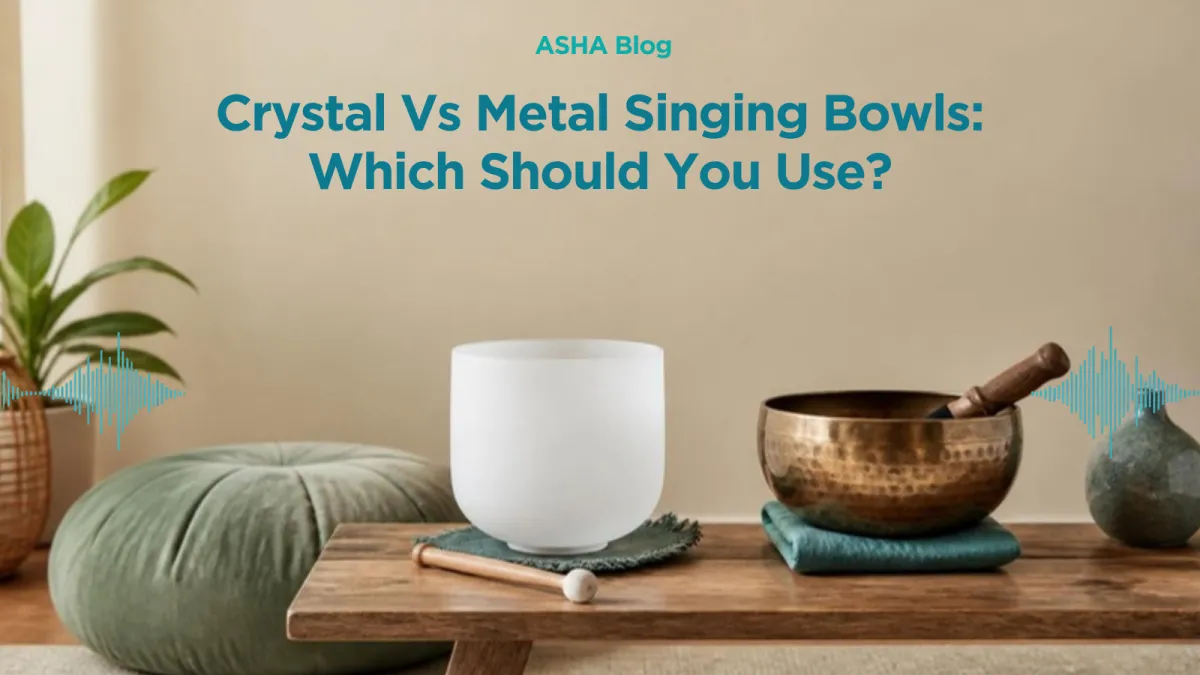
Metal singing bowls, often called Himalayan or Tibetan bowls, are the older lineage. Hand-hammered from bronze alloys, each one carries a complex voice: a fundamental tone wrapped in shimmering overtones that shift as the bowl is played. No two are identical.
Crystal bowls are the newer arrival, made from crushed quartz fused at high temperature. Their character is the opposite of complex: a single, pure, sustained tone that fills a room evenly and holds it there.
Everything else about choosing between them flows from that difference. Complexity versus purity. Texture versus immersion.
How They Feel In A Session
Metal bowls tend to invite curiosity and presence. The layered overtones give the listening mind something to follow, which makes them beautiful for grounding, for beginnings, and for clients who find total stillness confronting. Played on or near the body, their gentle physical vibration adds a tactile dimension crystal bowls cannot match.
Crystal bowls tend to invite surrender. The pure sustained tone washes through a space and holds people in it. In group sound baths they are extraordinary for creating a shared field of deep rest. For some listeners, though, that same intensity can feel like a lot, especially at volume or in smaller rooms.
Practical Differences That Matter
Volume and reach. Crystal bowls project. A single large crystal bowl can hold a hall. Metal bowls are more intimate and reward closer listening.
Durability and transport. Metal bowls survive a car boot and a decade of gigs. Crystal bowls are heavy, bulky and break if mistreated. If you run mobile sessions, this is not a small consideration.
Precision on the body. Metal bowls can be placed directly on a clothed body for vibrational work. Crystal bowls generally stay on the floor.
Cost. Both range widely, but building a matched crystal set is usually the bigger investment.
Choosing For The Client In Front Of You
This is where instrument choice becomes practitioner skill rather than shopping preference.
For a first-time client, a nervous system in high alert, or anyone with trauma history, the textured gentleness of metal bowls at moderate volume is often the safer opening. Intensity can come later, with consent.
For established clients seeking depth, for group baths, and for meditation settings, crystal bowls earn their reputation. The sustained tones slow the breath and settle a whole room together.
Many experienced practitioners use both in one session: metal to arrive and ground, crystal to deepen, metal again to return. The bowls are not rivals. They are registers of the same language.
The Question Behind The Question
When someone asks which bowl is better, they are usually asking something else: how do I do this work well? The answer is never the instrument alone. It is the practitioner's skill in reading the room, choosing intensity deliberately, and playing for the nervous system in front of them rather than for the drama of the sound.
That is a trainable skill, and it is the difference between owning instruments and practising sound therapy.
Build Your Instrument Skills
If you are running events and sound baths, the ASHA Sound Healing Event Toolkit covers instrument selection, room setup, screening and session design for public sound work.