
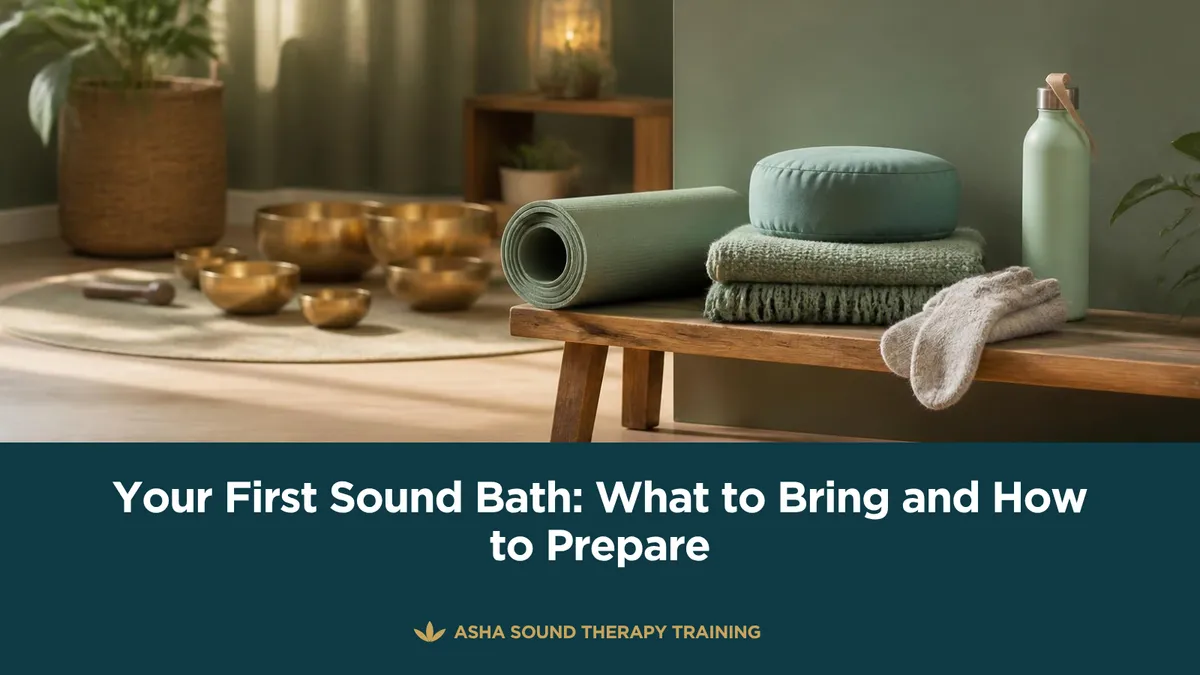
Your First Sound Bath: What to Bring and How to Prepare
For your first sound bath, wear soft layers, bring a mat, a blanket, a small pillow and water, and eat lightly beforehand. Arrive ten minutes early so you can set up without rushing. Tell the facilitator about anything that affects how you lie down or how you respond to sound. That is most of the preparation. The rest is letting yourself rest.
It is normal to feel a bit unsure before the first one. You do not know the room, the people or what is expected of you.
The good news is that very little is expected of you. Here is how to make it easy on yourself.
What should you wear?
Wear what you would wear to lie on a floor for an hour.
- Soft, loose clothing with no tight waistbands
- Layers, because body temperature drops as you settle
- Socks, since many studios ask for shoes off
- Nothing noisy, like jangly jewellery or crinkly jackets
Skip perfume if you can. Scent carries in a quiet room and some people are sensitive to it.
What should you bring?
Check what the venue provides. If you are not sure, bring:
- A yoga mat or thin camping mat
- A blanket. This is the one people most often wish they had brought.
- A small pillow for your head, and one for under your knees if your lower back prefers it
- An eye pillow or scarf to block light, if you like the dark
- Water for afterwards
- Earplugs, especially if you are sensitive to loud sound or the session includes gongs
You will not need a notebook or phone. Put the phone on silent and leave it in your bag.
What should you eat and drink beforehand?
Eat lightly. A heavy meal right before lying still for an hour can feel uncomfortable, and an empty stomach can be distracting.
A light snack an hour or two before works well for most people. Go easy on caffeine if you want to settle quickly.
Avoid alcohol before a session. You want to experience the room clearly.
What should you tell the facilitator?
A good facilitator will ask a few questions before you start. If they do not, tell them anyway. It helps them look after you.
Mention:
- Pregnancy
- Recent surgery or injury
- Hearing issues such as tinnitus or sound sensitivity
- A pacemaker or other implanted device
- Epilepsy or seizure history
- Anything that makes lying flat uncomfortable
- If you would prefer not to be touched or approached during the session
None of this will stop you attending in most cases. It lets the facilitator adjust where you lie, how loud they play or which instruments they bring close. Our guide to sound therapy contraindications explains why these questions matter.
What happens once you are there?
You set up your mat and settle in. The facilitator usually explains what will happen and how long it will run.
Then the sound begins. Your job is to rest.
- If your mind wanders, let it
- If you want to shift position, shift
- If you fall asleep, that is fine
- If you need to sit up or leave, you can
There is no correct way to experience a sound bath.
What about afterwards?
Take your time getting up. Roll to one side first, then come up slowly. Drink some water.
Some people feel clear and energised. Some feel sleepy. Some feel emotional without knowing why. All of these are common. If you are driving, give yourself a few minutes before you get behind the wheel.
Try to keep the rest of the evening gentle if you can. A quiet meal, an early night, a short walk. Many people find the effects of a session carry on for a few hours, and rushing straight into a busy evening can cut that short.
If you enjoyed it, notice what you liked. The instruments, the length, the size of the group, the facilitator's style. That helps you choose your next session well.
Frequently asked questions
Can I go to a sound bath on my own?
Yes. Many people do. You will be lying on your own mat with your eyes closed for most of it.
What if I fall asleep and snore?
It happens often. Facilitators are used to it, and it rarely bothers anyone.
Should I bring earplugs to a sound bath?
It is worth bringing them, especially for gong sessions or if you have sensitive hearing. You may never use them, but having the option helps you relax.
What if I feel emotional during the session?
That is a common response to resting deeply. You can let it pass, shift position, or sit up. Tell the facilitator afterwards if it would help to talk it through.
Is a sound bath the same as meditation?
Not quite. Meditation usually asks you to do something with your attention. A sound bath asks you to receive.
In short
Wear soft layers. Bring a mat, blanket, pillow, water and earplugs. Eat lightly. Tell the facilitator what they need to know. Then let yourself rest.
Want to find a trained, insured facilitator near you? Search the ASHA Practitioner Directory: https://www.australiansoundhealersassociation.com.au/asha-directory
Interested in training to lead sessions yourself? Explore ASHA's Sound Therapy Practitioner Training: https://www.australiansoundhealersassociation.com.au/sound-therapy-practitioner-training
Leith