How Sound Affects The Nervous System: A Trauma-Informed Look
Sound healing is having a moment. The risk in any moment is that the marketing outruns the substance. So this is the grounded version. What sound actually does to your nervous system, what the research says, and what stays in the realm of practitioner experience.
The Quiet Conversation You Did Not Know You Were Having
There is a conversation happening between sound and your nervous system right now, and you do not need to believe anything mystical for it to be real.
Every tone that reaches your ear is information. The brain reads frequency, rhythm, intensity, and duration, and the autonomic nervous system responds. Slow, sustained, low-pitched sounds tend to settle the body toward the parasympathetic state, where heart rate slows, breathing deepens, digestion turns back on, and the body shifts from alertness into repair. Fast, sharp, high-pitched sounds tend to do the opposite. They activate. They alert.
This is not a metaphor. It is wiring. It is happening to you on the bus, in your kitchen, at your desk, every minute of every day.
Sound therapy is the deliberate use of this wiring for the benefit of the client.
What Actually Changes In A Sound Session
When a client lies down for a sound bath or a one-to-one sound therapy session, several measurable things start to happen within the first few minutes.
The vagus nerve gets a signal. The vagus nerve is the long meandering cranial nerve that runs from the brain stem to most of the major organs. It is the main communication channel of the parasympathetic nervous system. Slow, resonant tones in the 60 to 200 Hz range are the kind of input that nudges vagal tone upward. Higher vagal tone is associated with better stress recovery, better sleep, and a more flexible nervous system.
Heart rate variability changes. Heart rate variability, or HRV, is the small natural variation in the time between heartbeats. It is one of the cleanest physiological markers of autonomic balance. Multiple studies, including a 2026 meta-analysis covering 24 randomised controlled trials and 1,295 participants, show that music and sound interventions reliably increase high-frequency HRV. That is the physiological signature of parasympathetic dominance. In plain language, the body has dropped out of fight-or-flight.
Breathing slows. The body tends to entrain to the dominant rhythm in the room. Long sustained tones invite long sustained breaths. Slower breathing further activates the parasympathetic system. The session becomes a feedback loop in the direction of rest.
Brainwave activity shifts. EEG studies of sound meditation sessions show changes in alpha and theta power, the wave patterns associated with relaxed alertness and meditative absorption. This is part of why people report feeling clear-headed and rested after a session, not foggy.
Why Low And Slow Settles The Body
The bias toward parasympathetic activation from low slow sound is partly evolutionary. Across human history, low frequencies in the environment have generally meant something stable. A deep human voice. A distant chant. A river. Wind in trees. The body learned to read these as not dangerous.
High, sharp, sudden sounds are the opposite. A crack. A scream. An alarm. The body is wired to interpret these as get ready. Even if you are intellectually fine with the noise, the nervous system has already responded.
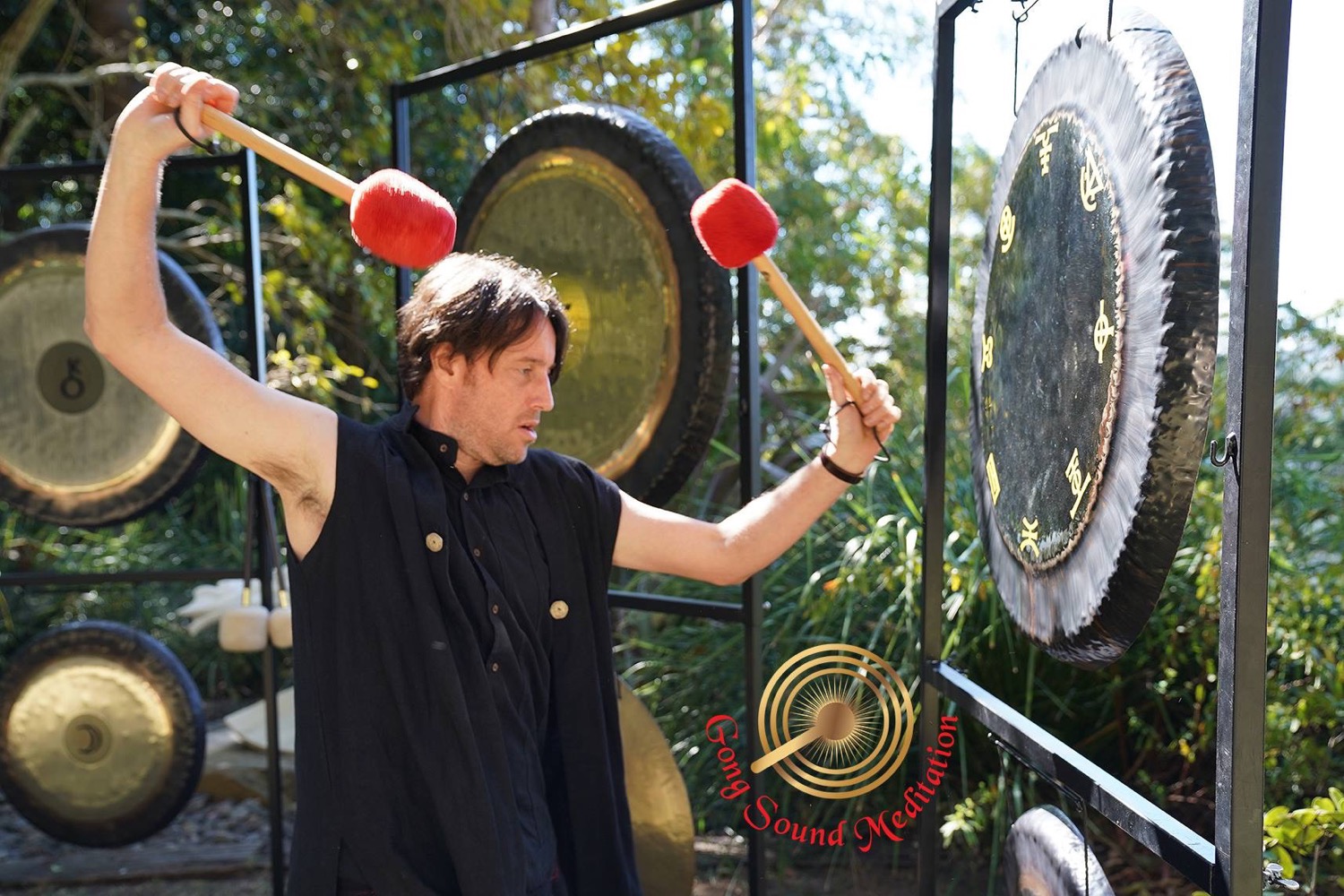
Sound therapists work with this. A gong played from far away in long sustained swells is not the same instrument as a gong struck hard at close range. The exact same instrument can settle a body or overwhelm one depending entirely on intensity, distance, and pacing. This is the kind of judgement that separates trained sound therapists from people who just bought a gong.
What Sound Therapy Cannot Do
Here is the part most wellness marketing skips. Sound therapy cannot cure anything. It is not a treatment for autism. It is not a replacement for evidence-based interventions like cognitive behavioural therapy, somatic therapy, occupational therapy, or medication. It is not a substitute for medical care.
What it can do, supported by current research, is help the nervous system shift into a calmer state, support sleep, reduce experienced anxiety in the short term, and create a sensory environment in which other forms of healing can land more easily.
An honest sound therapist holds both of those truths at the same time. The work is real. The limits are real.
What This Means If You Are Curious
If you are new to sound therapy and you have been wondering whether the experience is doing anything physical, the answer is yes. Your vagus nerve is responding to measurable physical signals. Your HRV is shifting. Your breathing is slowing. Your brainwave activity is changing. None of this requires belief.
If you are drawn to sound work as something more than a one-off, the research is clearest on regular practice over time. A single session can settle an evening. A regular practice over months can begin to reshape how your nervous system responds to stress in the first place.
What This Means If You Are A Practitioner
If you are training in sound therapy, the implication is that your instruments and your technique are interventions, not aesthetic choices. A gong played in a small room with a stressed client is a different decision than a tuning fork on a stable shoulder.
The grounded version of this work means understanding the science, the limits, and the responsibility. It means screening clients for contraindications, using informed consent, calibrating intensity to the body in front of you, and being honest about what the work can and cannot offer.
That is the kind of trauma-informed, science-aware sound therapy the Australian Sound Healers Association trains people in.
The Bottom Line
Sound therapy works with the nervous system through a real, measurable, well-documented mechanism. The effect is physiological, not mystical. The research is strongest for short-term anxiety reduction, HRV changes, sleep quality, and acute relaxation response. The research is weaker for long-term outcomes and condition-specific treatment claims.
Both can be true at once, and honest practitioners hold them both.
If this kind of grounded approach to sound therapy is what you want to train into, the ASHA 300-hour Sound Therapy Advanced Practitioner Training is the certified pathway in Australia. Trauma-informed, IICT-recognised, and built on the science and ethics described above.