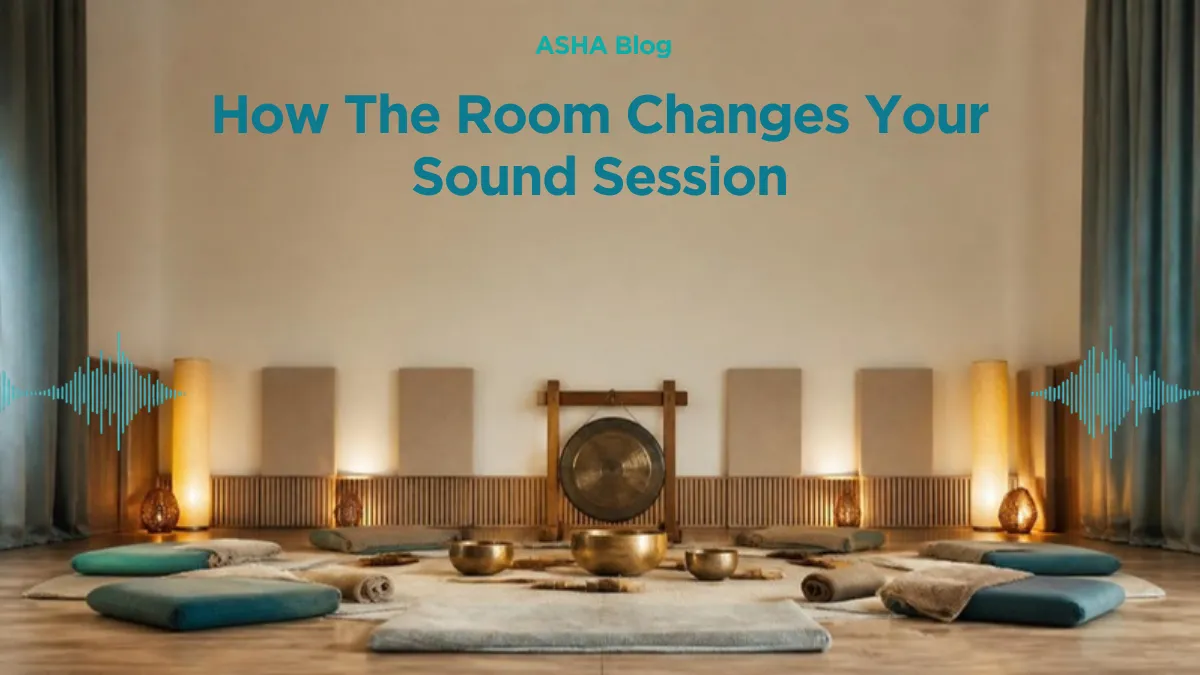
How The Room Changes Your Sound Session
Two identical sessions, two different rooms, two completely different experiences. The space you play in is not a backdrop. It is an instrument, and learning to read it is one of the most underrated skills in sound therapy.
The Room Is Playing Too
Every sound you make in a session is really two sounds: the one that leaves your instrument, and the one the room gives back. Hard surfaces reflect and brighten. Soft surfaces absorb and warm. High ceilings let a gong bloom; low ceilings compress it. Before a single client arrives, the room has already made half your musical decisions for you.
Practitioners who ignore this fight their spaces all session. Practitioners who read the room play with it, and their sessions sound intentional in a way clients feel but cannot name.
How To Read A Space In Five Minutes
Clap once and listen. A sharp slap-back means hard reflective surfaces; a quick dead thud means heavy absorption. Both are workable once you know.
Hum and walk. A slow walk while humming a low note reveals where sound pools and where it dies. Every room has warm spots. Put the listening bodies in them.
Find the noise floor. Stand silent for one full minute. Traffic, fridge hum, air conditioning, the cafe next door. Whatever you hear in that minute, your clients will hear in the quietest passage of your session, so plan around it: schedule against quiet hours, mask gently, or choose instruments that sit above the rumble.
Check the exit experience. Squeaky floorboards, banging doors and hallway chatter matter most at the end, when the room is silent and nervous systems are wide open.
Playing To The Room You Have
Bright, echoing rooms (halls, yoga studios with hard floors): slow everything down. Reflections stack, so leave more space between strikes, favour lower and warmer instruments, and keep gong swells moderate; the room will amplify intensity you did not intend. Rugs, curtains and bodies all soften a bright room.
Dead, carpeted rooms (small treatment rooms, converted offices): the room gives nothing back, so bring instruments closer to clients, use sustained tones rather than relying on natural decay, and let placement on or near the body carry the vibration the air cannot.
Big open spaces (halls, outdoor events): sound thins with distance. Cluster your audience rather than scattering them, raise instrument count or projection deliberately, and accept that intimacy is the trade for scale.
Safety Lives In The Room Too
Acoustic ecology is also a trauma-informed issue. A room that reflects harshly can turn a moderate gong into an overwhelming one at the back wall. Volume that feels right where you stand can be a very different experience two metres away. Walk your own room during setup and listen from where the most exposed client will lie. Intensity is a consent issue, and the room is part of the dose.
The Portable Practitioner's Kit
If you work across venues, three humble items change everything: a couple of rugs or blankets for taming bright floors, a door wedge and a printed session-in-progress sign for the corridor, and a habit of arriving thirty minutes early to read the space before anyone lies down. Half of professional sound work is logistics done lovingly.
Learn To Read Any Room
ASHA's 300-hour Advanced Practitioner Training is online, start anytime, and grounded in trauma-informed practice, ethics and scope. Graduates can apply for practitioner insurance through ASHA.