I Stopped Trying To Convince Sound Healing Sceptics
For years I tried to win the argument. The dinner party debate, the raised eyebrow, the relative who says it is all placebo. I had the studies ready. Then I stopped, and my practice, and my peace, got better. Here is what I do instead.
The Argument I Kept Having
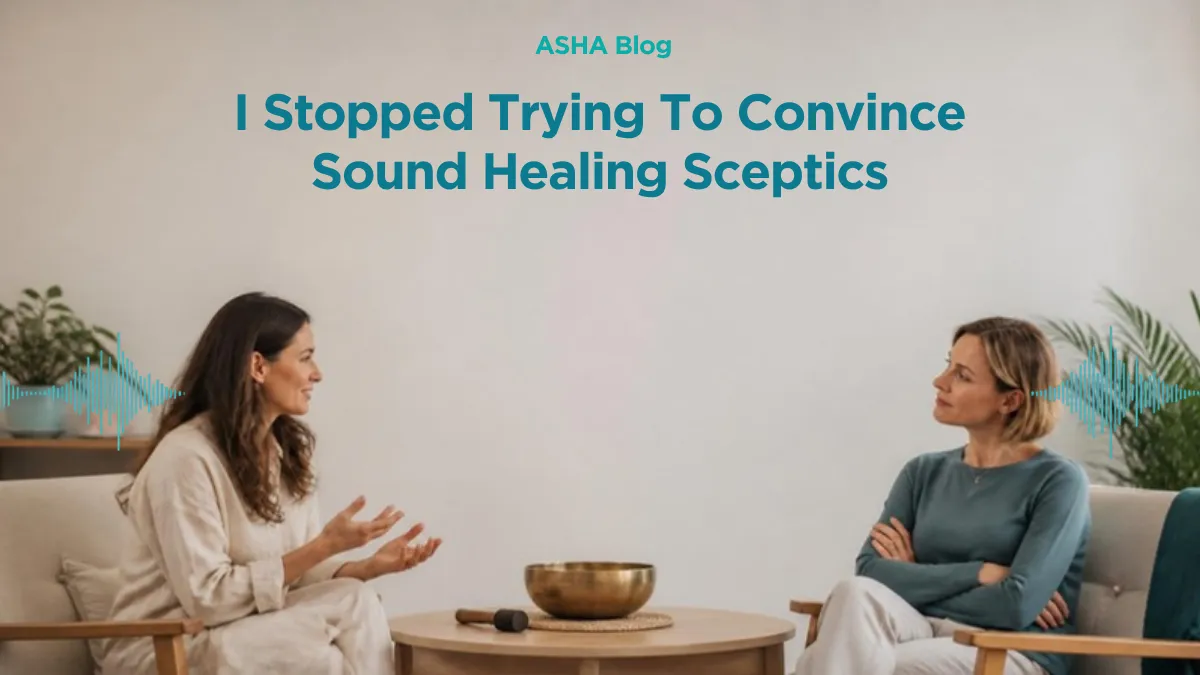
If you work with sound, you know the moment. Someone asks what you do, you answer, and the air changes. Sometimes it is polite curiosity. Sometimes it is the smirk. And sometimes it is the full cross-examination: where is the evidence, is it not just relaxation, you know that is placebo, right?
I used to meet that moment armed. HRV studies. The singing bowl trials. Polyvagal theory. I would build the case, point by point, and watch something strange happen: the better my argument, the harder the resistance. Nobody in the history of dinner parties has ever been argued into openness.
Why Convincing Backfires
Here is what I eventually understood. When I argue, I put the sceptic in a position where changing their mind means losing. Their scepticism hardens, not because the evidence is weak, but because the frame is adversarial.
Worse, arguing made me sound like the thing they suspected I was: someone selling something. The harder I pushed, the more I looked like I needed them to believe. Need is not credibility.
And there was something else, harder to admit. Some of my urgency was my own doubt looking for reassurance. Winning arguments was a way of settling a question I had not fully settled in myself.
What I Do Now
I agree with the true parts. When someone says the field is full of overclaiming, I agree, because it is. That honesty usually disarms the room. I am not defending an industry. I am describing a practice.
I describe rather than persuade. I say what I actually see: people arrive wired and leave rested. I talk about the nervous system, rest, and what clients report. Description invites curiosity. Claims invite cross-examination.
I name the limits before they do. Sound therapy is not a medical treatment. It does not cure conditions. The research is strongest on short-term relaxation and stress recovery and still developing beyond that. When I say the limits out loud, there is nothing left to catch me on.
I extend the invitation and drop the rope. Come to a session if you are ever curious. That is it. No follow-up campaign. Some of my steadiest clients were sceptics I never chased.
What Happened When I Stopped
The energy I spent defending the work went back into doing the work. My sessions got better. My marketing got quieter and more honest, and the people it attracted were the ones I most wanted to serve: thoughtful, grounded, a little sceptical themselves.
And the sceptics? A few came to a session eventually, on their own timing. A few did not, and we still enjoy dinner. It turns out the work never needed me to win the argument. It needed me to hold a standard.
Want To Work Within Your Scope, Confidently?
ASHA's 300-hour Advanced Practitioner Training is online, start anytime, and grounded in trauma-informed practice, ethics and scope. Graduates can apply for practitioner insurance through ASHA.