Sound Healing at Home: How to Start a Simple Daily Practice
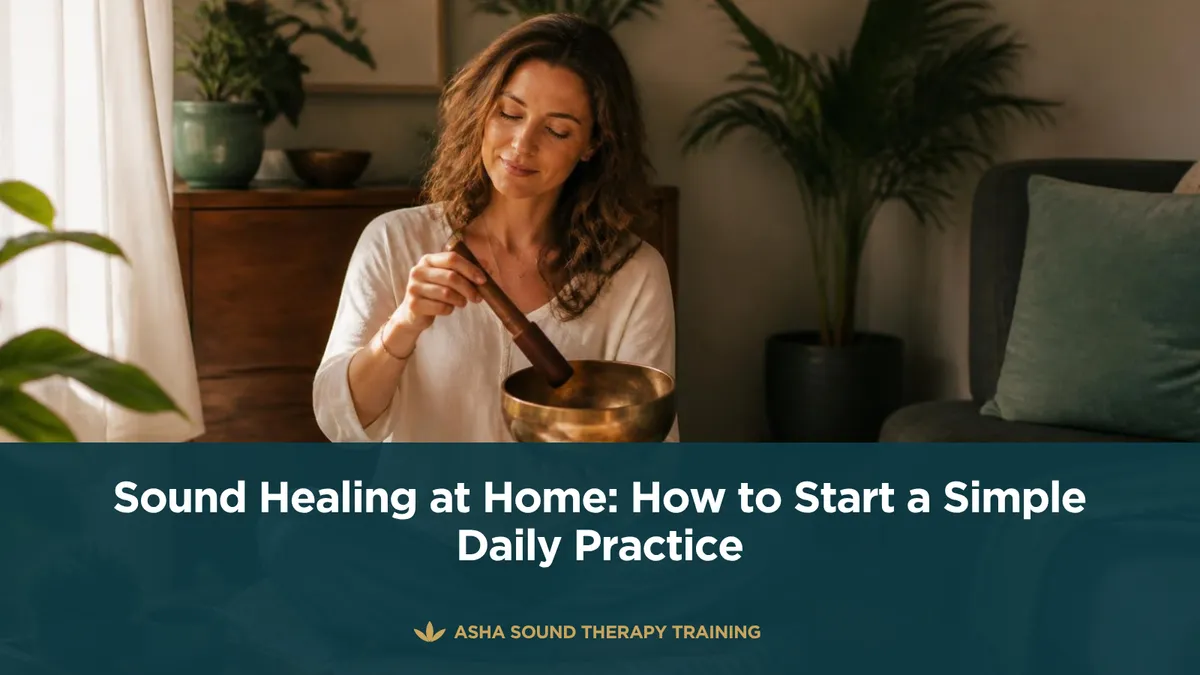
You can start a sound healing practice at home with one instrument, ten minutes and a quiet corner. A single singing bowl is enough. Play it slowly, listen to the sound until it fades completely, and notice your breath and body as you go. Doing a short practice most days matters more than doing a long one occasionally.
Many people come to sound healing after a sound bath and wonder how to bring some of that feeling home. You do not need a room full of instruments. You need a simple routine you will actually keep.
Here is how to start.
What do you need to begin?
Less than you think.
- One instrument. A singing bowl is the easiest starting point. A tuning fork or a small chime also works.
- A quiet spot. A corner of a room is plenty.
- Something to sit or lie on. A cushion, a chair or a mat.
- Ten minutes. Put it somewhere in your day where it will not be crowded out.
Resist the urge to buy a full set straight away. One instrument, played well, teaches you more than ten played distractedly.
Which instrument should you start with?
Most people start with a singing bowl. It is forgiving, easy to play and produces a long, steady tone.
Brass bowls have a warmer, more layered sound. Crystal bowls are purer and often louder. Neither is better. Choose the sound you want to come back to. Our guide to crystal vs metal singing bowls goes through the differences in detail.
Before you buy, listen to the bowl if you can. The sound matters more than the look or the story on the label.
What does a simple ten-minute practice look like?
Try this:
- Settle (2 minutes). Sit or lie comfortably. Notice where your body touches the floor or chair. Let your breath find its own pace.
- Strike and listen (5 minutes). Strike the bowl gently. Listen until you cannot hear it anymore. Pause. Strike again. Follow the sound all the way to silence each time.
- Rest in the quiet (2 minutes). Put the mallet down. Stay with the silence. Notice anything that has shifted in your breath or body.
- Close (1 minute). Open your eyes if they were closed. Move slowly. Notice how you feel before you get up.
That is the whole practice. The listening is the point.
Why does listening to the fade matter?
Following a sound until it disappears gives your attention a simple, steady task. It is hard to plan dinner while you are tracking a tone into silence.
Many people find that this kind of focused listening helps them slow down. It is similar to how some people use the breath in meditation, but with something external to hold onto.
How do you keep the practice going?
A few habits help:
- Same time, same place. Attach it to something you already do, like your morning coffee.
- Keep the instrument visible. If it is packed away, you will forget it.
- Lower the bar. Two minutes still counts on a busy day.
- Notice without judging. Some days will feel settled. Some will not. Both are practice.
Once the ten-minute practice feels familiar, you can vary it. Try lying down instead of sitting. Try humming softly along with the tone. Try a slightly longer silence at the end. Change one thing at a time so you can notice what it does. Small, curious adjustments keep a practice alive without turning it into a chore.
When is a home practice not enough?
A home practice is a lovely personal resource. It is not a replacement for medical or psychological care.
If you are dealing with something heavy, such as ongoing distress, trauma or a health condition, please speak with your GP or a mental health professional. Sound can sit alongside that care, not in place of it.
Frequently asked questions
Can I do sound healing on myself?
Yes. Many people use a singing bowl or tuning fork for personal relaxation and focus. It is a self-practice, not therapy.
How loud should I play a singing bowl at home?
Softly. Close to your ears, even a small bowl can be loud. Start gently and keep the bowl at arm's length or further.
Do I need to meditate to use a singing bowl?
No. Listening is enough. The sound gives your attention somewhere to rest.
How much should I spend on my first singing bowl?
It varies widely. Choose a bowl whose sound you enjoy and that sits within a budget you are comfortable with. Price alone does not tell you much.
Should I play a singing bowl on my body?
Wait until you have had some guidance. Placing bowls on the body is a skill that should be learnt properly, especially around sensitive areas or health conditions.
In short
One instrument. Ten minutes. Listen until the sound fades, then rest in the quiet. Keep it small enough to do most days.
If you want a community of people who practise and learn together, Silver Membership is where to start: https://gojoin.australiansoundhealersassociation.com.au
Interested in training to lead sessions yourself? Explore ASHA's Advanced Practitioner Training, download the syllabus, or book a discovery call to talk it through.
Leith