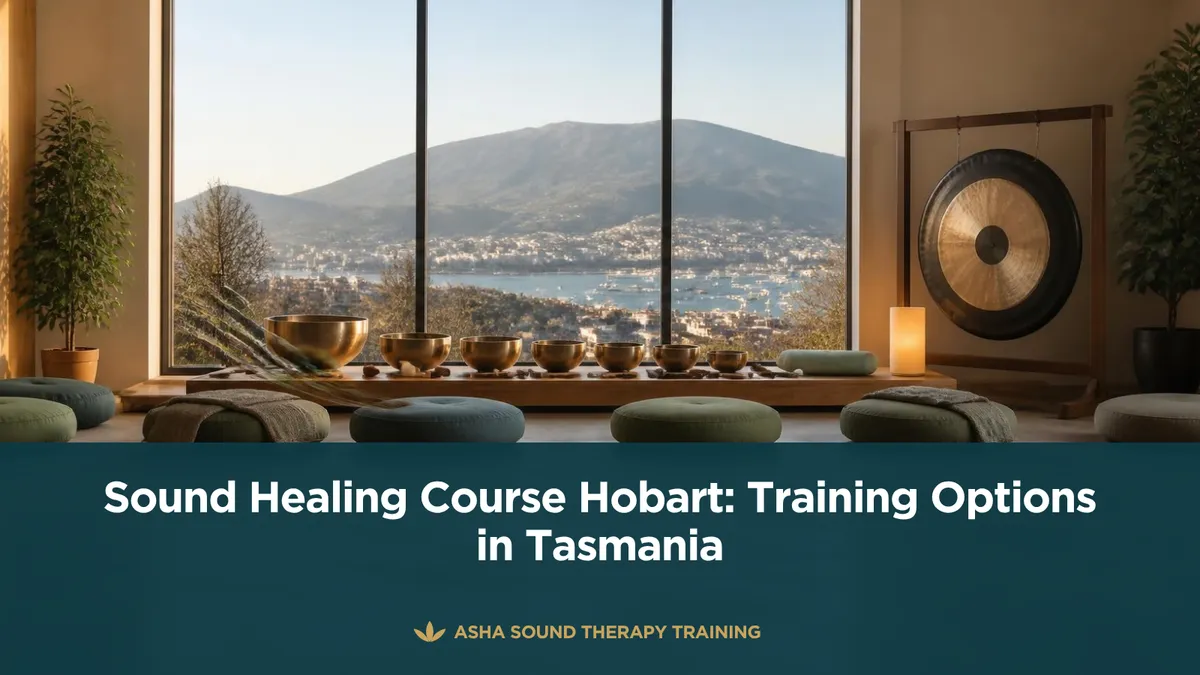
Sound Healing Course Hobart: Training Options in Tasmania
If you live in Hobart or anywhere in Tasmania and want to train in sound healing, your realistic options are short local workshops, travel to the mainland for intensives, or structured online practitioner training with live sessions. For a professional pathway, online training through a recognised professional body is often the most practical choice, because you can learn at home and practise with your own clients as you go.
This is something we hear from Tasmanian students often. There is interest in sound healing across the state, and not always a clear place to start.
Here is how to think through your options.
What are your options for sound healing training in Tasmania?
Broadly, there are three routes.
1. Local workshops and introductions. Short sessions run by local facilitators. These are a lovely way to experience the work and meet people. They are usually introductory rather than a full practitioner pathway.
2. Mainland intensives. Some people travel to Melbourne, Sydney or Brisbane for in-person training. That can be valuable, but flights, accommodation and time away add up quickly.
3. Structured online training. Recorded modules, live group sessions, practical assessments and a professional body behind the certification. You study from home and practise locally.
Many Tasmanian practitioners combine them. They train online, then attend local sessions to keep learning from others in the room.
Can you really learn sound healing online?
Yes, if the course is designed for it. The theory, the science of how sound affects the nervous system, ethics, scope of practice and business skills all teach well online.
The hands-on part depends on how practice is built in. Look for training that includes:
- Clear video demonstrations of instrument technique
- Live sessions where you can ask questions in real time
- Practical assignments you complete with real people
- Feedback on your practice from experienced trainers
- A community of other students to practise and debrief with
If a course is only a set of videos with no feedback, it is a resource, not practitioner training.
What should you check before enrolling anywhere?
Wherever you train, ask these questions first:
- What will I be able to do at the end? Look for specific skills, not vague promises.
- Who is teaching? Check their experience in practice, not only their social following.
- Is it trauma-informed? Sound sessions can bring emotion to the surface. Your training should prepare you for that.
- Does it cover scope of practice? You need to know clearly what sound healing is and is not.
- Can I get insurance afterwards? Professional indemnity and public liability insurance are essential for paid work.
- Is there ongoing support? A community and professional body matter long after the course ends.
Be cautious of any course that implies government recognition. There is no government-recognised credential for sound healing in Australia. Our article on sound healing certification in Australia explains what certification means and what it does not.
How does ASHA training work for Tasmanian students?
The Australian Sound Healers Association (ASHA) runs the Sound Therapy Advanced Practitioner Training online, so where you live does not limit you.
Students work through structured modules, join live monthly group sessions, complete practical assessments and, on completion, receive ASHA certification as an Advanced Sound Therapy Practitioner. Graduates can access practitioner insurance through ASHA and apply to be listed in the ASHA Practitioner Directory.
The training is trauma-informed from the first module. It teaches the science alongside the practice, and it is clear about scope from day one.
What does it look like to practise in Tasmania?
Practitioners in smaller communities often find the work grows through word of mouth. Community halls, yoga studios, retreats and one-to-one sessions at home are common starting points.
The practitioners who do well tend to have three things in common: solid training, proper insurance, and a clear, honest way of describing what they offer.
Frequently asked questions
Is there a sound healing course in Hobart?
Local workshops run from time to time. For a full practitioner pathway, many Hobart students choose online training with live sessions, then practise locally.
Do I need to travel to the mainland to train?
Not with ASHA training. It is delivered online. You practise with people in your own community as part of the course.
Is sound healing training government recognised in Australia?
No. There is no government-recognised sound healing credential in Australia. Look for certification through a professional body with clear standards and an insurance pathway.
Can I get insured as a sound practitioner in Tasmania?
Yes. Insurance is available to trained practitioners Australia-wide. ASHA graduates can access cover through ASHA.
How long does practitioner training take?
It depends on the course and your pace. Ask any provider for the total hours and the expected completion time before you enrol.
In short
Tasmania does not need to be a barrier to training. Choose a course with real practice built in, trauma-informed teaching, clear scope and an insurance pathway, and you can build your practice from home.
See the Sound Therapy Advanced Practitioner Training: https://www.australiansoundhealersassociation.com.au/sound-therapy-practitioner-training
Leith