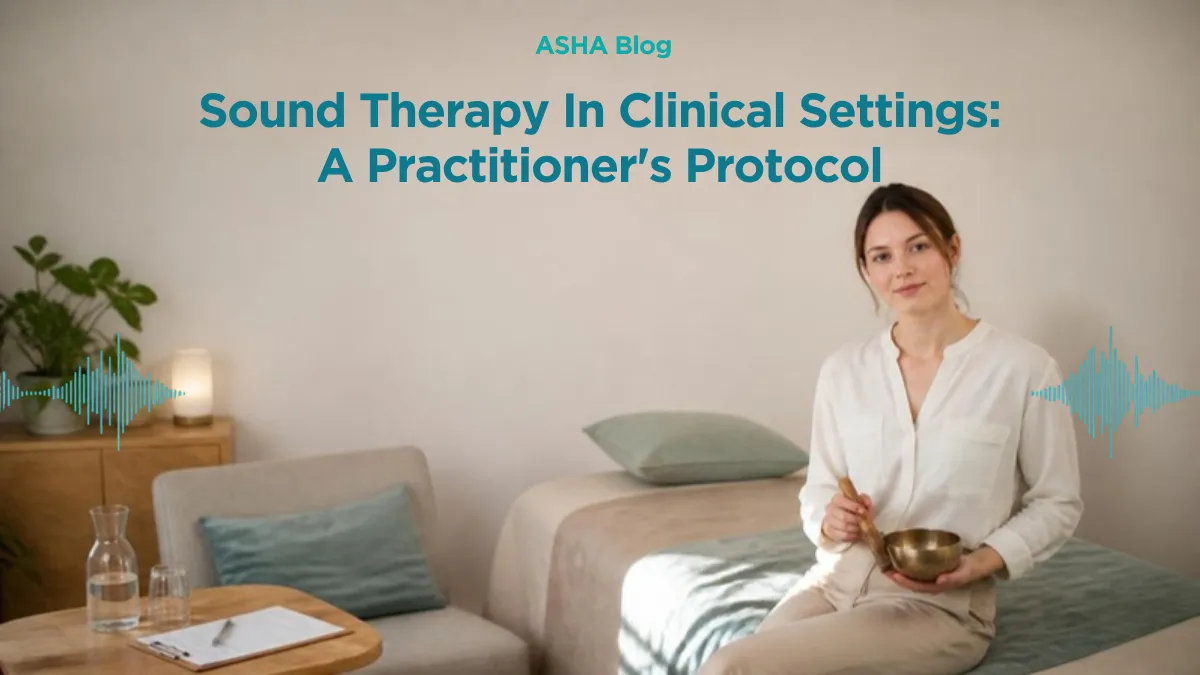
Sound Therapy In Clinical Settings: A Practitioner's Protocol
A sound session in a hospice ward is not a sound bath in a yoga studio with different lighting. When this work enters clinical settings, everything tightens: consent, screening, documentation, coordination. This is the protocol for practitioners stepping into that world.
The Setting Changes The Standard
More Australian practitioners are being invited into clinical and care environments: palliative care units, aged care homes, rehabilitation programs, mental health day services, hospital wellbeing initiatives. The invitation is a sign the field is maturing. It is also a responsibility, because in these settings your clients are patients, your host is a care team, and the margin for casual practice is zero.
The practitioners who thrive here are the ones who arrive already speaking the language of clinical environments: scope, consent, screening, documentation, coordination.
Scope Of Practice, Stated Plainly
In clinical settings, you are providing a complementary wellbeing intervention focused on relaxation and nervous-system settling. You are not treating conditions, managing symptoms clinically, or replacing any element of care. Write this down, say it in your introduction meeting, and repeat it in your service agreement. Far from weakening your position, a crisply stated scope is what makes clinical teams comfortable bringing you in. Vague practitioners are risks. Bounded practitioners are colleagues.
Consent When Capacity Varies
Studio consent is simple: an informed adult chooses your session. Clinical consent has more layers. Patients may be fatigued, medicated, cognitively impaired or simply worn down by having little say in their days. The protocol: consent comes through the care team first, then from the person, every time, in plain language, with an easy no. In dementia and palliative contexts, watch for embodied consent as well; a person who turns away or tenses has answered, whatever was said. And session by session, consent resets. Yesterday's yes is not today's.
Screening With The Care Team
In clinical settings you screen twice. First with staff: contraindications on the ward that day, pacemakers and implanted devices, seizure histories, acute psychiatric states, hearing devices, anyone for whom stimulation is currently unhelpful. Then with the person, briefly and warmly. Keep intensity conservative by default: gentler instruments, moderate volume, shorter durations, more distance. In fragile populations, less is almost always more.
Documentation Is Part Of The Work
A one-page record per visit: date, location, who was seen (as the facility prefers it recorded), duration, instruments used, observed responses, anything flagged to staff. Whatever the facility asks you to log, log. Your notes are how the care team integrates your work into theirs, and they are your professional protection. In clinical environments, if it is not written down, it did not happen.
Working As A Guest In Someone Else's House
Arrive on time, sign in properly, follow infection-control instructions, and treat handovers as sacred. Ask staff what you need to know today before you play a note. Report anything notable before you leave. The fastest way to lose clinical work is not a bad session; it is being difficult to host. The fastest way to keep it is to make the coordinator's job easier every visit.
The Credibility Prerequisites
Before approaching clinical settings, have the stack in order: recognised training, current professional indemnity and public liability insurance, a police check and any facility-required clearances, and association membership that shows you work to standards. Facilities will ask, and having it ready is itself a signal.
Where This Level Of Practice Lives
ASHA's 300-hour Advanced Practitioner Training is online, start anytime, and grounded in trauma-informed practice, ethics and scope. Graduates can apply for practitioner insurance through ASHA.